
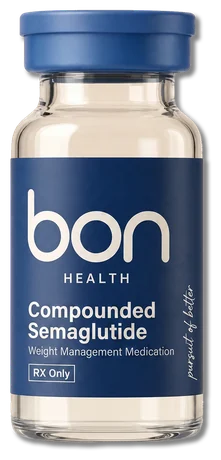
Austin trains hard. Marathon blocks that build through the winter, dawn runs to beat the heat, climbing gyms after work, rec-league games most nights. So it's no surprise that BPC-157 is one of the most-asked-about peptides in town. The question most people have isn't really "what is it?" anymore. It's "how do I get it the right way?"
This guide walks through how BPC-157 is prescribed online in Austin, what you actually receive, and why the "research only" vials sold all over the internet are a different thing altogether.
What BPC-157 is
BPC-157 is a short chain of 15 amino acids based on a fragment of a protein found in gastric juice. It has been studied for tendon, ligament, muscle and gut repair, and published reviews describe a wide range of research on how it interacts with blood-vessel growth and tissue recovery [1]. That's why people who train are curious about it.
What it isn't: a proven fix for any injury or condition. No one can promise how your body will respond, and anyone who does is selling something. A licensed clinician looks at your history and decides whether it makes sense for you at all.
The two ways people get BPC-157
Path 1: a prescription
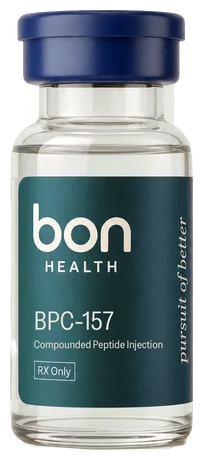
This is the path Bon uses. You fill out an online assessment. A licensed U.S. clinician reviews it. If they decide BPC-157 fits, a state-licensed 503A compounding pharmacy makes it for you by name, labels it with your prescription, and ships it.
In October 2026, the U.S. Department of Health and Human Services announced an interim policy saying it won't take enforcement action against licensed pharmacies that compound six specific peptides, BPC-157 among them, for individual patients when strict conditions are met [3]. Those conditions include a patient-specific prescription, ingredients from FDA-registered facilities with a certificate of analysis, and adverse-event reporting. The policy is temporary and could change, and compounded drugs are still not FDA-approved.
Path 2: "research use only" vials
Search for BPC-157 and you'll find dozens of sites selling vials labeled "for research only, not for human use." Those products sit outside the prescription system entirely. Nobody reviews your health history. The label tells you not to put it in your body. And the HHS policy doesn't cover research-use-only material at all; one of its stated goals is to steer people away from it.
Why "research only" is a gamble
It's not about scare tactics. It's about what you can and can't know:
- What's in the vial. A research-chemical seller isn't dispensing to a patient, so there's no prescription label and usually no way to tie the vial to a tested batch.
- Who checked whether it fits you. No one. You're on your own for interactions, conditions and dosing.
- What you do if something feels off. There's no care team to message and no pharmacy that knows your name.
- What you're mixing. Many research vials arrive as powder you reconstitute yourself. Bon's arrives ready to use, with the supplies you need.
How online prescribing works in Austin
- Assessment (about 5 minutes). From your phone: your health history, your training, what you want to support.
- Clinician review. A licensed U.S. clinician reviews your answers and decides whether BPC-157 is right for you, or whether something else, or nothing, makes more sense. If you're not prescribed, you get a full refund.
- Made for you. If prescribed, a U.S. pharmacy makes your vial by name from tested ingredients.
- Shipped cold to Austin. Every order ships free by 2-day delivery in a cold pack, which matters when July porch temperatures pass 100°F.
- Ongoing care. A fresh vial ships each month. You can message your care team, and you can pause or cancel anytime.
There's no Bon clinic in Austin, and no waiting room. Everything happens online. You can read everything about the product on the BPC-157 page.
A note for drug-tested athletes
BPC-157 is on the World Anti-Doping Agency (WADA) Prohibited List under S0, non-approved substances [2]. Substances in that class are banned at all times, in and out of competition. If you race, lift or play in a drug-tested event, BPC-157 isn't for you, prescription or not. USADA notes that a therapeutic use exemption is unlikely [2].
Pairing it with TB-500
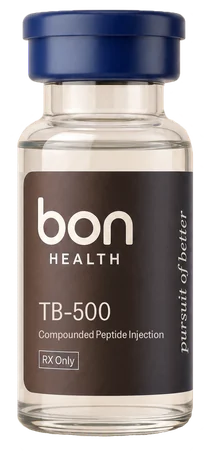
Many Austin patients ask about BPC-157 and TB-500 together, the pairing people call the Wolverine stack. They're two separate prescriptions, and your clinician reviews each one on its own. Read more on the TB-500 page.
FAQ
Can I get BPC-157 in Austin without visiting a clinic?
Yes. The assessment, the clinician review and your follow-up messages are all online. If you're prescribed, the vial ships straight to your Austin address.
Is BPC-157 legal to prescribe?
A licensed clinician can prescribe it, and under the HHS interim policy a state-licensed 503A pharmacy can compound it for an individual patient when the policy's conditions are met. It is not FDA-approved, and the policy could change.
How is a prescription vial different from a "research only" one?
A prescription vial is made for you by name, from tested ingredients, after a clinician decides it fits you. A research-only vial is labeled not for human use and comes with none of that.
What if I'm not prescribed?
You get a full refund.
Does BPC-157 come ready to use?
Yes. Bon's arrives ready to use with injection supplies and a how-to guide. There's nothing to mix.
Ready to see if BPC-157 fits you?
Start your BPC-157 assessment. It takes about five minutes, a licensed clinician makes the call, and you get a full refund if you're not prescribed.
This article is for general education and is not medical advice. Compounded drugs are not FDA-approved and have not been reviewed by the FDA for safety, effectiveness or quality. Prescription required; a licensed clinician decides whether any product is right for you. Individual results vary.